About
I started out wanting to make video games.
I ended up building software that takes work off people's plates, and it turns out the two have a lot in common. I'm Federico Medinilla, and I've been shipping web applications for six years, out of Buenos Aires.
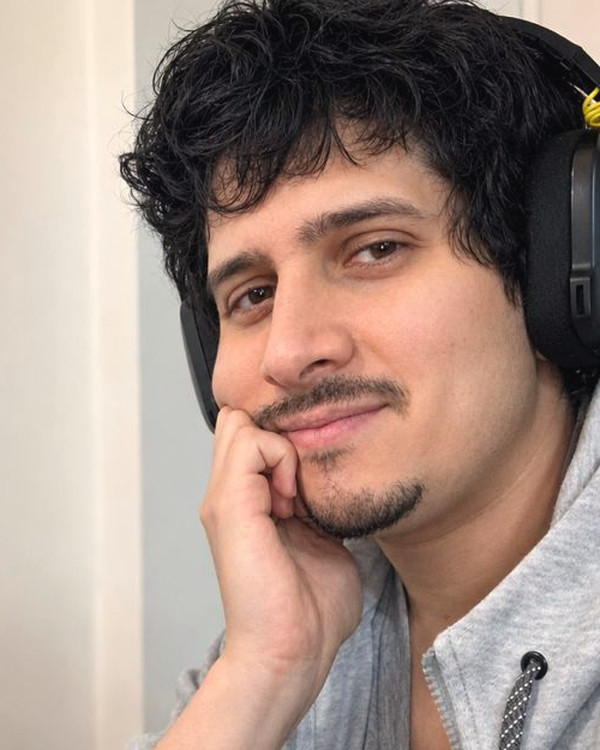
- 6 years shipping software to production
- 50+ sites built from scratch
- 139 security checks per handover
- Zero people between you and the code
Where I studied
- Programming Technical Degree Universidad Tecnológica Nacional (UTN) 2020 – 2023
- Game Programming and Design Image Campus 2014 – 2016
- AI Automation programme Coderhouse 2026
- Full-stack JavaScript The Odin Project · freeCodeCamp along the way
I remember the things he forgets.
— the octopus
Where I come from
In 2014 I enrolled at Image Campus to make video games. I didn't end up doing that for a living, but one habit stuck: in a game, if the player can't tell what to do in the first five seconds, the problem is the game. Never the player.
That's what I think every time someone apologises to me for “not being good with technology”. There's nothing to be good at. If the screen doesn't explain itself, it's badly built, and that's my job.
The years of practice
The early years were piecework: more than fifty sites for three agencies, on roughly one-week cycles. You learn fast when a mistake comes due on Friday.
Then two years at Puzzles Consulting, rebuilding WordPress and Elementor sites as hand-written front-ends, in teams of five or more, alongside people who'd just started. That's where I learned the other half of the craft: code nobody else can read is worthless, however well it runs.
Why I ended up in automation
I have ADHD. In practice it means I can spend hours inside a hard problem without looking up and, that same day, drop the small task that needed doing again.
I started automating long before it was a job. The first things were AutoHotkey scripts that did the repetitive part of an online game for me, so I could keep the part worth playing. Then an Alexa set up to remember what I wouldn't: reminders, timers, alerts. The idea underneath was always the same, and it hasn't changed: let the machine do the part I was going to forget.
Over time I realised most of my clients had something similar going on, diagnosis or not. The site worked fine; what kept slipping was everything around it: orders arriving as loose messages, delivery notes typed by hand, the same question answered for the tenth time. Since 2024 almost everything I build has some of that inside. Software written for one specific case, that takes over one concrete thing you do by hand today.
Something I do that nobody asks for
I'd never sell you something I wouldn't use myself.
I use what I build. That's where what people sometimes call my perfectionism comes from: I audit every handover against OWASP before I give it to you. I built my own framework with 139 checks across eleven surfaces, I run all of it, and the report is yours to keep.
Your application probably isn't anyone's target. But the day something happens, the difference between a scare and a problem is whether someone looked first.
What working with me is like
I work alone. The person who answers your email is the one who writes the code, the one who'll ask why you do things that way, and the one on the other end when something breaks six months in.
That has an obvious limit: I can't take ten projects at once. And it has an advantage you'll notice from the first meeting: you'll never explain the same thing to three different people.
If any of this sounds like your situation, tell me where your day goes. I'm the one who answers.
Got it.
I'll reply to the address you left, usually the same day. A copy of what you wrote is on its way there too.
I'll reply to the address you left, usually the same day.